Travel Technology in India: A Complete Guide to the Industry
Written by the Rayds team · Updated
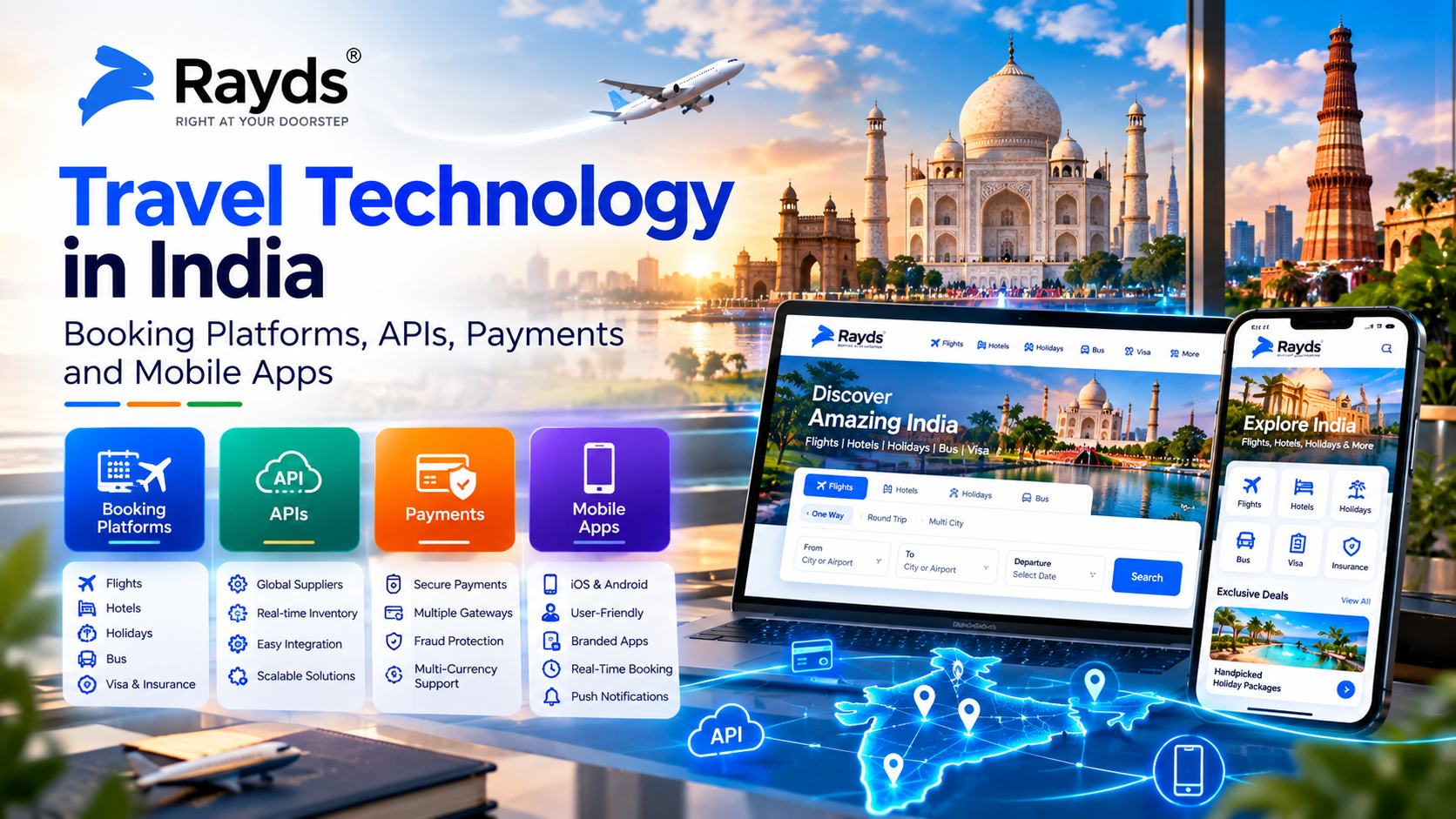
India is one of the most interesting travel markets in the world, and almost all of that growth runs on technology: mobile apps, instant UPI payments, live airline and hotel feeds, and now AI. If you run a travel business, or plan to start one, understanding this landscape helps you decide where to invest.
We build travel booking technology at Rayds, so this guide is written from the practical side of the industry. We'll cover what travel technology is, how big the Indian market is, who the main players are, which technologies matter, and where things are heading.
The short answer
Travel technology is the software that lets people search, book and pay for travel. In India it is driven by mobile-first customers, UPI payments and growing regional air connectivity. Research from Phocuswright puts the market at about USD 41.7 billion in 2025, with online gross bookings around USD 24 billion, and expects it to grow in 2026.
What Is Travel Technology?
Travel technology (often called travel tech) covers every system used to search, sell, book, pay for and manage trips. Think of it in five layers:
- Supply and distribution: airline systems, GDS and NDC connections, hotel aggregators, bus and rail feeds.
- Booking platforms: the websites, apps and booking engines customers and agents use.
- Payments: UPI, cards, net banking, wallets and refunds.
- Back office: accounting, cancellations, commissions, reporting and customer support.
- Data and AI: personalization, dynamic pricing, chat assistants and trip planning.
The glue between these layers is APIs. If that term is new to you, our guide to travel API integration explains how they work.
The Indian Travel Industry at a Glance
Here are the numbers most often used to size the market. We use Phocuswright for the travel market figures and NPCI data for payments, and list all sources at the end of this page.
| Measure | Figure | Source |
|---|---|---|
| India travel market, 2025 | About USD 41.7 billion (up 1%) | Phocuswright |
| Online gross bookings, 2025 | About USD 24 billion (up 4%); offline fell 2% | Phocuswright |
| 2026 forecast | About USD 47.2 billion (up 13%), partly from higher airfares | Phocuswright |
| 2029 forecast | About USD 59.1 billion; online share rising to about 62% | Phocuswright |
| UPI, August 2026 | 24.51 billion transactions worth ₹29.82 lakh crore, up 22% in volume year on year | NPCI, via press reports |
| Mobile share of online travel bookings, 2025 | About 65% | Mordor Intelligence (estimate) |
A note on numbers: you'll see very different "India online travel market" figures online, from roughly USD 25 billion to over USD 60 billion for 2026, depending on the research firm. They define the market differently (gross bookings vs. revenue, which services are included). Treat any single figure as an estimate, and compare like with like.
Who's Who in the Ecosystem
- Online travel agencies (OTAs): large consumer platforms such as MakeMyTrip, Yatra, EaseMyTrip and Cleartrip, alongside global players like Agoda.
- Suppliers: airlines (IndiGo, Air India, Akasa Air, SpiceJet and Air India Express are among the main domestic carriers), hotel chains and aggregators, bus operators, and IRCTC for rail.
- Travel agents and sub-agents: thousands of independent agencies that increasingly rely on B2B portals to access live inventory.
- Corporate travel companies: travel management companies (TMCs) and self-booking tools for business travel.
- Technology providers: GDS companies, API aggregators, white label portal builders, payment gateways and back-office software vendors. This is where Rayds sits.
Core Technologies Behind Indian Travel Platforms
Supplier APIs and distribution
Live flights, hotel rooms, buses and packages reach your site through supplier APIs and aggregators. On the airline side, the industry is gradually moving from older GDS messaging toward NDC, which lets airlines sell richer fares and extras directly. Good integration handles fare re-checks, mapping and cancellations.
Digital payments
UPI has changed how Indians pay. It processed a record 24.51 billion transactions in August 2026, and customers now expect to pay for a ticket in a few taps. A travel platform without UPI, cards and wallets loses sales at the last step.
Mobile-first apps
Most online travel bookings in India now happen on phones. That means fast apps, light pages, one-tap payments, regional-language support and reliable notifications for tickets and changes.
AI and personalization
AI is showing up in trip planning, customer support and recommendations. Industry voices expect structured products like flights and branded hotels to become bookable by AI agents first, while complex trips (multi-city, visas, high-value bookings) will still need a human to approve. Our view: AI will change how customers find you, so your inventory and booking flow need to be fast and easy to use.
Back-office automation
Refunds, reissues, commission tracking, agent wallets and GST-ready invoices decide whether a portal can grow without hiring a large operations team.
What Makes India Different
- Mobile and UPI first: customers pay instantly and expect the same speed from travel sites.
- Price sensitivity: travellers compare fares closely and can switch to rail or road on shorter routes.
- Rail and bus matter: IRCTC and bus platforms are as important as flights for many customers.
- Growth beyond the metros: the UDAN scheme has widened regional air connectivity, and tour operators report rising travel demand from Tier-2 and Tier-3 cities, including international trips.
- Strong agent network: many bookings still go through agents, who need B2B tools, wallets and credit-style flexibility.
Trends to Watch in 2026 and Beyond
- Online keeps gaining share. Phocuswright expects online penetration to keep rising through 2029 as offline bookings decline.
- AI-assisted planning and booking. More customers will start their trip research with an AI assistant, so clear inventory and fast checkout matter more.
- Experiences and short breaks. Operators such as Thomas Cook India and SOTC report a stronger focus on experiences, events and shorter trips.
- Direct airline distribution. NDC adoption continues, with agents needing tools that support it.
- Tech for smaller agencies. Ready-made B2B and white label platforms make it possible for small agencies to offer what only large OTAs could a few years ago.
Challenges the Industry Faces
- Rising airline costs. Fuel costs have pushed airlines to add surcharges and raise fares in 2026, and price-sensitive customers limit how much can be passed on.
- Thin margins. Heavy discounting and marketing spend make profitability hard for consumer platforms.
- Fragmented suppliers. Many suppliers means many data formats and frequent changes to maintain.
- Payment and booking mismatches. A payment that succeeds while a booking fails needs an automatic, clear resolution.
- Data protection. Travel platforms hold passport, ID and payment details, so security and compliance with India's data protection law are essential.
How to Start With the Right Travel Technology
- Choose your model: B2C (sell to customers), B2B (sell to agents) or B2B2C (a mix).
- Start focused: pick the products and routes your customers actually book, such as domestic flights and hotels first.
- Decide build vs. buy: for most agencies, a white label portal with ready supplier connections gets you live faster than building from scratch.
- Set up payments and markup: enable UPI and cards, and make sure you can change markup without a developer.
- Check compliance: speak to your accountant about GST, TCS and any licensing that applies to your business.
- Test before you launch: run real search, booking, cancellation and refund flows end to end.
Frequently Asked Questions
Sources
Figures are as reported in September 2026 and may be revised. Estimates from research firms vary.
- Phocuswright, India Travel Market Essentials 2026, as reported by TravelMole and Hotel News Resource
- NPCI UPI data for August 2026, as reported by Business Standard
- Mordor Intelligence, India Online Travel Market (mobile share; market estimate)
- IMARC Group, India Online Travel Market (alternative market estimate)
- TTR Weekly, Thomas Cook India and SOTC traveller insights
- Outlook Traveller, AI and Indian travel
Building a Travel Business in India?
We can show you how flights, hotels, buses and payments fit together on one white label portal, and help you choose the setup that suits your business.
Talk to Our Team