Top Features Every Successful Homestay Booking Portal Must Have
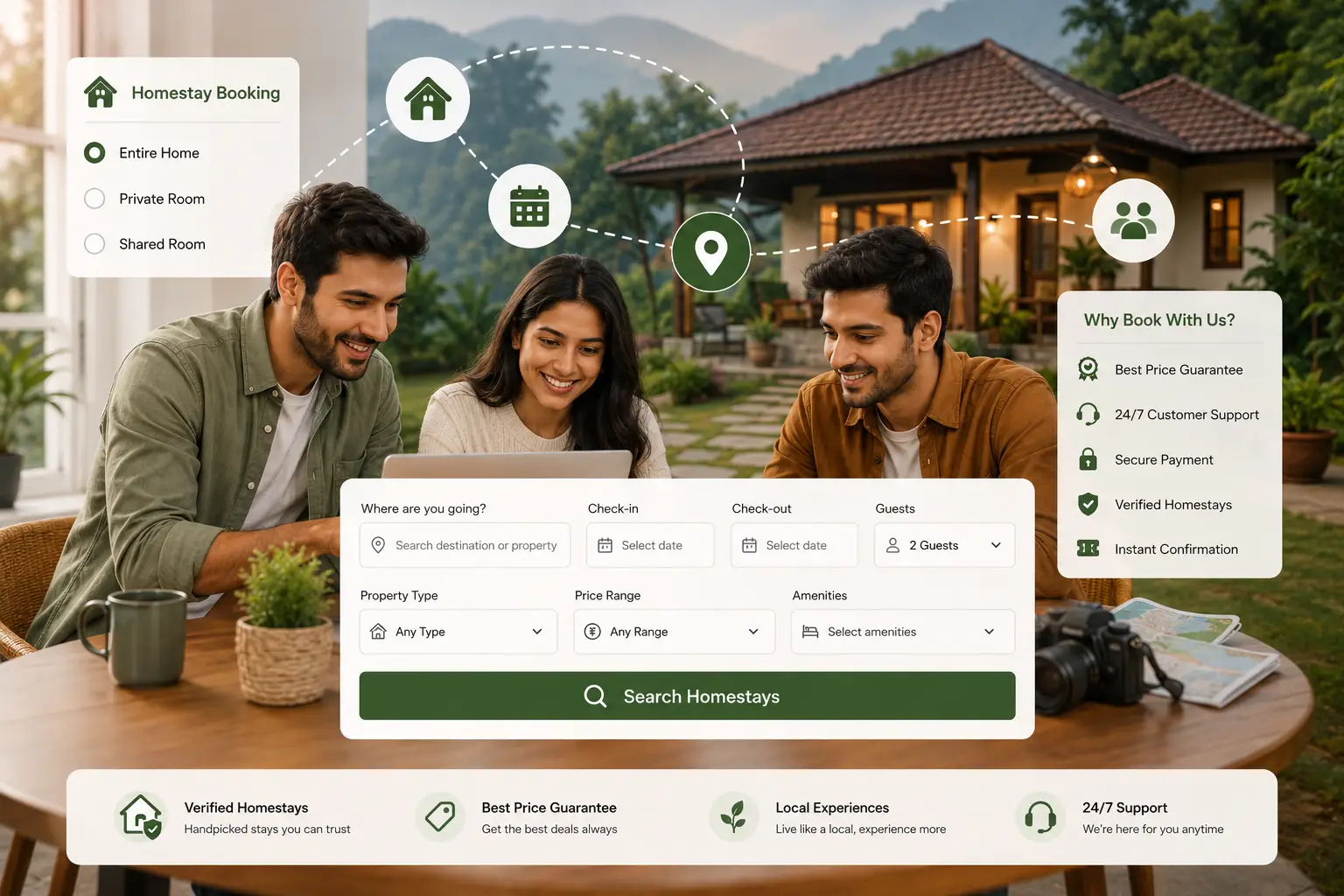
Building a successful homestay booking portal requires more than just a property listing page. To compete in today's experience-driven travel market, your platform must include advanced features that build host trust, delight travellers, and maximise revenue at every step.
1. Real-Time Availability Calendar
A live availability calendar syncs with hosts in real time, preventing double bookings and displaying
instant confirmations. iCal and Google Calendar integration lets hosts manage listings across
multiple platforms without manual updates.
2. Host & Property Management Panel
Hosts need a self-serve dashboard to upload room photos, set seasonal pricing rules, manage
check-in/out times, list amenities, and track earnings. A guided onboarding wizard reduces
host drop-off and gets properties live faster.
3. Smart Search & Advanced Filters
Allow travellers to filter by location, dates, guest count, amenities (pet-friendly, private pool,
mountain view), price range, and Superhost status. Map-based browsing dramatically improves
property discovery and booking intent.
4. Instant & Request Booking Modes
Offer both Instant Booking (auto-confirmed) and Request Booking (host approval within 24 hrs).
Instant booking reduces friction for last-minute travellers, while request mode lets hosts
screen guests for longer stays.
5. Verified Reviews & Rating System
A dual-sided review system — where guests rate hosts and hosts rate guests — with verified-stay
badges builds credibility and drives repeat bookings. Trust is the #1 conversion factor
in the homestay segment.
6. Secure Payment Gateway & Escrow Protection
Multiple payment options like UPI, credit/debit cards, net banking, and wallets ensure secure
and seamless transactions. An escrow model holds payment and releases it to the host after
check-in, protecting both parties and reducing chargebacks.
7. In-App Messaging & Notification System
A built-in chat lets guests and hosts coordinate check-in details without sharing personal
contact information. Automated SMS and WhatsApp notifications for booking confirmation,
reminders, and review requests improve overall engagement.
8. Dynamic Pricing & Revenue Management
AI-powered dynamic pricing adjusts rates based on demand, local events, and seasonality —
maximising host earnings while staying competitive. Admins can configure platform-level
markup or commission rules per host tier.
9. B2B & B2C Modules
A modern homestay portal must support both B2B (agent-based bookings with custom markup rules)
and B2C (direct traveller bookings) to unlock multiple revenue streams from a single platform.
10. Multi-Currency & Multi-Language Support
Serve inbound international tourists by displaying prices in their local currency and offering
Hindi, English, French, and other language interfaces — critical for heritage homestays
in Rajasthan or backpacker hubs in Kerala targeting European guests.
11. Admin Dashboard & Reporting
A centralised admin panel for managing host verifications, dispute resolution, commission
payouts, GST reporting, and conversion analytics. Real-time dashboards help you spot
underperforming listings and optimise platform health at scale.
12. Mobile Responsive Design
Since most travellers browse and book via smartphones, your homestay portal must be fully
responsive and optimised for mobile devices — from property search to payment confirmation.
Frequently Asked Questions
Homestay portals focus on individual property owners (hosts) rather than hotel chains. They require host onboarding tools, dual-sided reviews, and flexible check-in coordination — unlike hotel portals that connect to GDS or OTA inventory APIs.
Yes, modern white label homestay portals support hybrid B2B & B2C modules. Travel agents can book on behalf of clients with special markup rules, while direct travellers book at consumer pricing — maximising revenue from both channels.
Real-time calendar syncing with iCal and Google Calendar, combined with instant inventory locks at the payment step, ensures a property is marked unavailable the moment a booking is confirmed — eliminating double bookings completely.
UPI (PhonePe, GPay, Paytm), credit/debit cards, net banking, and EMI options are essential for the Indian market. For international travellers, integrating Stripe or PayPal ensures seamless cross-border payments.
A fast booking engine, verified review system, instant booking option, secure payment gateway, and mobile-friendly design together significantly improve conversion rates on a homestay portal.
Build Your Homestay Portal with Rayds
Get a fully integrated white label homestay booking portal with all advanced features — launch-ready in weeks.
Request Demo