Travel Mobile App Development: A Complete Guide to Features, Technology & Process
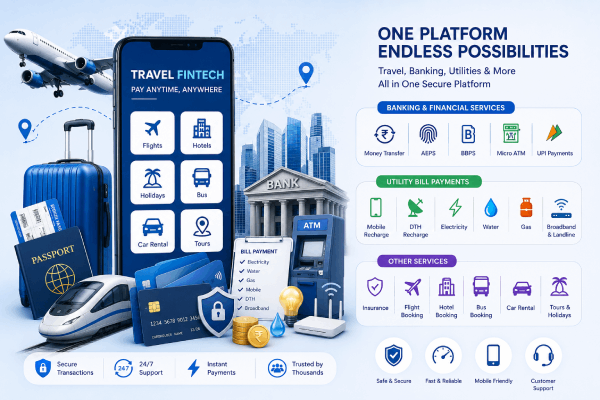
Mobile has become the primary way travelers research, book, and manage their trips. A dedicated travel app gives your business a direct, always-available channel to customers — something a website alone cannot match.
This guide walks through everything you need to understand before building a travel app: why it matters, the features that make a travel app successful, the right technology choices, how APIs power the booking experience, and the process of taking an app from idea to launch.
1. Why a Mobile App Matters for Your Travel Business
A travel app offers advantages a mobile website simply cannot replicate — push notifications for deals and booking updates, offline access to itineraries and tickets, faster repeat bookings through saved profiles, and higher customer trust through app-store presence.
Travel businesses that offer both a website and an app typically see stronger repeat engagement from app users, since notifications and saved details reduce the friction of booking again.
2. Must-Have Features in a Travel Mobile App
The features you choose shape the entire user experience. Here is what a competitive travel app typically includes:
| Feature Category | What It Includes |
|---|---|
| User Onboarding | Social login, OTP verification, profile management |
| Search & Booking | Flight/hotel/bus search filters, real-time availability, booking flow |
| Payments | UPI, cards, wallets, saved payment methods, refunds |
| Push Notifications | Price drop alerts, booking confirmations, schedule changes |
| Itinerary Management | Trip timeline, e-tickets, boarding passes, document storage |
| GPS & Maps | Nearby hotels, live flight tracking, location-based offers |
| In-App Chat Support | Live chat, chatbot, WhatsApp integration |
| Offline Mode | Access tickets and itineraries without an internet connection |
| AI Recommendations | Personalized destination and package suggestions |
| Loyalty & Rewards | Points, referral bonuses, tiered membership |
3. Technology Stack for Travel App Development
The technology you choose affects development speed, app performance, and how easy the app is to maintain over time. Here are the leading options:
| Layer | Technology Options | Best For |
|---|---|---|
| Cross-Platform Frontend | React Native, Flutter | A single codebase covering both iOS and Android |
| Native iOS | Swift, SwiftUI | Maximum performance on iPhone |
| Native Android | Kotlin, Jetpack Compose | Maximum performance on Android |
| Backend | Node.js, PHP Laravel, Python | Core booking logic and API orchestration |
| Database | MySQL, PostgreSQL, Firebase | User and booking data storage |
| Push Notifications | Firebase Cloud Messaging, OneSignal | Re-engagement and real-time alerts |
| Cloud Hosting | AWS, Google Cloud, Firebase | Scalable backend infrastructure |
Recommended stack for most travel apps: React Native or Flutter for the frontend, paired with a Node.js or PHP Laravel backend, a MySQL or PostgreSQL database, and Firebase for notifications. This combination covers both iOS and Android from a single codebase while keeping development straightforward.
4. How APIs Power a Travel App
A travel app's booking capability comes entirely from the APIs it connects to. These are the core categories most travel apps integrate with:
- Flight APIs (e.g. TBO, Amadeus, Sabre) — real-time fares and seat availability
- Hotel APIs (e.g. HotelBeds, TBO Hotels) — room inventory and pricing
- Maps & Location (e.g. Google Maps SDK, Mapbox) — navigation and location-based search
- Payment Gateways (e.g. Razorpay, PayU, Stripe) — secure checkout across cards, UPI, and wallets
- SMS/OTP Verification (e.g. Twilio, MSG91) — secure login and booking confirmation
5. Native vs Cross-Platform — Which Should You Choose?
| Factor | Cross-Platform ✅ | Native ❌ |
|---|---|---|
| Development Effort | Single codebase for both platforms | Two separate codebases |
| Time to Market | Faster | Slower |
| Performance | Good for most travel apps | Best for heavy graphics/AR |
| Maintenance | Single codebase to update | Two codebases to maintain |
6. The Travel App Development Process
Define Core Purpose
Decide the primary booking modules and target users before writing any code.
Choose the Tech Stack
Pick React Native or Flutter for cross-platform coverage, or native if performance demands it.
Integrate APIs
Connect flight, hotel, and payment APIs for real-time booking capability.
Design the UX Flow
Build a frictionless search-to-checkout flow with minimal taps.
Test Thoroughly
QA across devices, OS versions, and poor network conditions.
Publish & Market
Launch on the App Store and Play Store, then invest in ASO and marketing.
7. Travel App Trends to Watch
🤖 AI Trip Planning
AI-generated itineraries based on budget, dates, and traveler preferences.
📱 Super App Model
Flights, hotels, visas, and insurance combined in a single unified app experience.
💳 Biometric Checkout
Face ID and fingerprint-based one-tap payment for returning users.
🌐 Offline-First Design
Tickets and itineraries accessible without a data connection while traveling.
Frequently Asked Questions (FAQs)
Ready to Build Your Travel App?
Get a free consultation to discuss features, technology, and the right approach for your travel app.
Request Free Demo →