Top Features Every Successful Nepal Money Transfer Platform Must Have
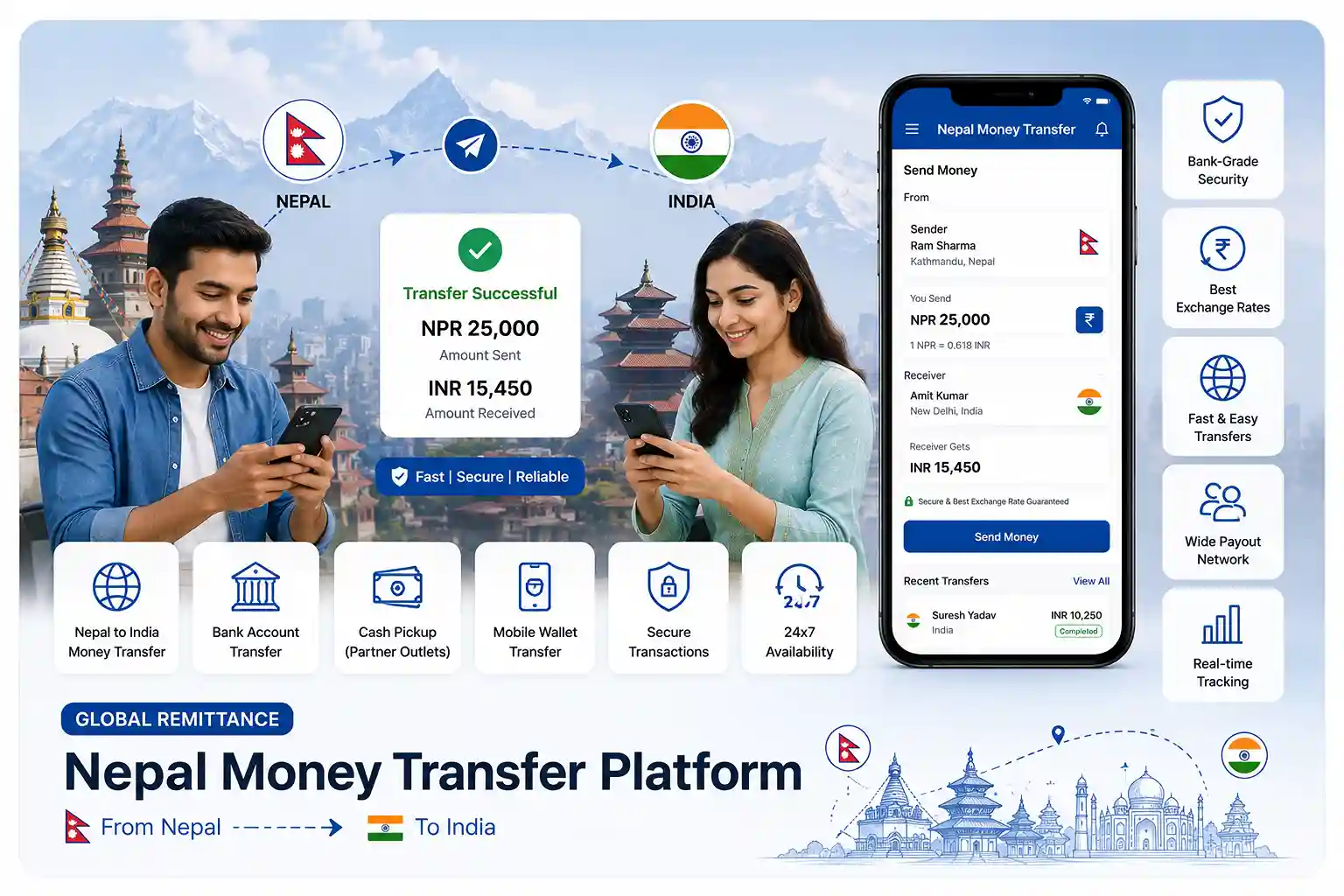
Cross-border digital payments continue to transform the financial industry by making international remittance faster, safer, and more accessible. Businesses and customers increasingly prefer digital platforms that eliminate complicated paperwork and lengthy banking procedures. Nepal transfer services have become highly important for users who regularly send money across borders and require secure, real-time transaction processing.
A successful Nepal money transfer platform should offer much more than simple international fund transfers. Customers expect beneficiary management, real-time currency processing, transaction tracking, secure payment systems, instant confirmation, and account visibility. Businesses operating remittance ecosystems also require retailer modules, commission management systems, analytics dashboards, and scalable API integrations.
Modern fintech ecosystems frequently integrate cross-border transfers with Domestic Money Transfer, UPI QR Payment systems, AEPS Banking solutions, and BBPS services. Combining multiple financial services creates stronger engagement and expands business opportunities.
If you are planning to build an international remittance ecosystem, below are the key features every successful Nepal transfer platform should include.
Key Features of Nepal Money Transfer Platform
Instant India to Nepal Transfer
Send money instantly from India to Nepal bank accounts with fast processing.
Secure KYC Verification
Complete Aadhaar, PAN, and identity verification ensures safe transactions.
Live INR to NPR Exchange Rate
Real-time currency conversion ensures transparent and fair pricing.
Real-Time Transfer Tracking
Track every transaction from initiation to successful completion.
1. Cross-Border Transfer API Integration
Cross-Border Transfer API Integration refers to the process of connecting a digital payment platform with international banking or remittance networks through secure APIs to enable seamless money transfers across countries. In a UPI-based ecosystem operated under the National Payments Corporation of India, such integration allows users and businesses to send and receive funds globally by linking domestic payment systems with foreign banking partners, correspondent banks, or international payment networks. The API handles key functions such as currency conversion, compliance checks (KYC/AML), transaction routing, and real-time status updates. This ensures that cross-border payments are faster, more transparent, and cost-effective compared to traditional remittance methods. It also enhances user experience by enabling real-time tracking, automated settlements, and secure fund transfers, making global transactions smoother for businesses, freelancers, and travelers.
2. Beneficiary Management System
A Beneficiary Management System is a core module in digital payment platforms that allows users or businesses to securely add, store, verify, and manage recipients of funds. In a UPI-based ecosystem governed by the National Payments Corporation of India, this system enables users to create and maintain a list of trusted beneficiaries using details such as UPI ID, mobile number, or bank account information. Once a beneficiary is added and verified, future transactions become faster and more convenient, as users do not need to re-enter details every time. The system also includes security checks like OTP verification and bank validation to prevent fraud and unauthorized transfers.
3. Instant Transfer Processing
Instant Transfer Processing refers to the ability of a digital payment system to complete fund transfers within seconds, ensuring that money moves from the sender’s account to the receiver’s account in real time without delays. In a UPI-based infrastructure governed by the National Payments Corporation of India, instant transfers are enabled through a highly optimized switch network that connects banks and payment service providers 24/7. Once a transaction is initiated and authenticated using methods like UPI PIN or biometric verification, the system immediately validates, authorizes, and processes the payment. The confirmation is sent instantly to both parties, making the transaction seamless and reliable. This capability eliminates traditional banking delays, improves cash flow for businesses, and enhances user experience by supporting uninterrupted, real-time financial activity across the ecosystem.
4. Currency Conversion Support
Currency Conversion Support in a digital payment system refers to the ability to automatically convert one currency into another during a transaction, enabling seamless cross-border payments for users and businesses. In a UPI-based ecosystem operated by the National Payments Corporation of India, this feature allows international transactions where the payment amount is dynamically converted based on real-time foreign exchange rates at the time of transfer. It ensures that users can send or receive money in different currencies without manually calculating exchange values. The system typically integrates with banking partners and forex providers to handle rate updates, conversion fees, and settlement in the recipient’s local currency. Currency conversion support makes global transactions more convenient, transparent, and efficient, especially for travelers, freelancers, and businesses engaged in international trade.
5. Transaction Tracking System
A Transaction Tracking System is a module in digital payment platforms that allows users, merchants, and administrators to monitor the real-time status and history of financial transactions. In a UPI-based ecosystem governed by the National Payments Corporation of India, this system provides detailed visibility into each payment, including initiation time, processing status, success or failure updates, and final settlement confirmation. It assigns a unique transaction reference ID to every payment, enabling easy tracking and reconciliation. By offering transparency, instant updates, and accurate records, the transaction tracking system enhances trust, reduces confusion in failed or pending payments, and improves overall financial control for all stakeholders.
6. Multi-Payment Method Support
Multi-Payment Method Support refers to a feature in digital payment platforms that allows users to choose from multiple ways to complete a transaction within a single system. In a UPI-based ecosystem managed by the National Payments Corporation of India, this can include UPI IDs, QR code scanning, bank account transfers, payment links, cards, and sometimes wallet integrations. This flexibility ensures that customers are not restricted to a single payment option and can complete transactions using their preferred method. Multi-payment method support also helps businesses adapt to different user preferences, making the payment system more versatile, scalable, and efficient for both domestic and international transactions.
7. Retailer & Distributor Module
A Retailer & Distributor Module is a structured feature in a digital payment or financial platform that manages different levels of business users within a distribution hierarchy. In a UPI-based ecosystem operated under the National Payments Corporation of India, this module enables organizations to onboard, manage, and monitor retailers and distributors who facilitate transactions, onboarding of merchants, or cashless payment services. Distributors typically act as intermediaries who manage multiple retailers, while retailers directly interact with end users or small merchants. The system provides role-based access, commission tracking, transaction monitoring, and reporting tools for each level. It also supports revenue sharing models, automated settlements, and performance analytics, making it easier for platforms to manage large networks efficiently.
8. Transaction History & Digital Receipts
Transaction History & Digital Receipts is a key feature in digital payment systems that allows users and merchants to access a complete record of all financial activities along with proof of payment. In a UPI-based ecosystem managed by the National Payments Corporation of India, transaction history includes details such as date and time of payment, amount, transaction ID, sender and receiver information, and current status (successful, pending, or failed). Digital receipts are automatically generated after each successful transaction and serve as an official confirmation of payment. These receipts can be shared via SMS, email, or downloaded from the application for record-keeping and reconciliation purposes.
9. Analytics Dashboard
An Analytics Dashboard is a centralized reporting interface in a digital payment system that provides real-time insights into transaction performance, user activity, and business growth. In a UPI-based ecosystem operated by the National Payments Corporation of India, this dashboard helps merchants, distributors, and platform administrators monitor key metrics such as total transactions, success and failure rates, revenue trends, peak usage hours, and settlement status. It presents data in visual formats like charts, graphs, and summaries, making it easier to analyze financial performance and operational efficiency. Overall, the analytics dashboard enhances transparency, control, and data-driven decision-making in digital payment ecosystems.
10. Security & Fraud Protection
Security & Fraud Protection in a digital payment ecosystem refers to the mechanisms and technologies designed to safeguard users, merchants, and financial institutions from unauthorized access, cyber threats, and fraudulent transactions. In a UPI-based framework governed by the National Payments Corporation of India, multiple layers of security are implemented, including two-factor authentication (such as UPI PIN verification), encryption of sensitive data, secure APIs between banks, and device binding to ensure only registered devices can initiate transactions. Additionally, real-time fraud detection systems continuously analyze transaction patterns to identify suspicious activity and block potential fraud attempts. Together, these measures ensure that digital payments remain secure, reliable, and trustworthy while maintaining fast and seamless transaction processing.
Digital Receipts & History
Download transaction receipts and view full transfer history anytime.
Fraud Protection System
Secure platform with monitoring to prevent unauthorized transactions.
Admin Analytics Dashboard
Monitor transactions, revenue, and agent performance in real time.
Customer Support System
24/7 support for resolving transaction and service-related issues.
Frequently Asked Questions
Launch Your Nepal Transfer Platform
Build a complete cross-border remittance ecosystem with instant transfers, retailer systems, dashboards, and secure payment infrastructure.
Request Demo