Top Features Every Successful Loan Repayment Platform Must Have
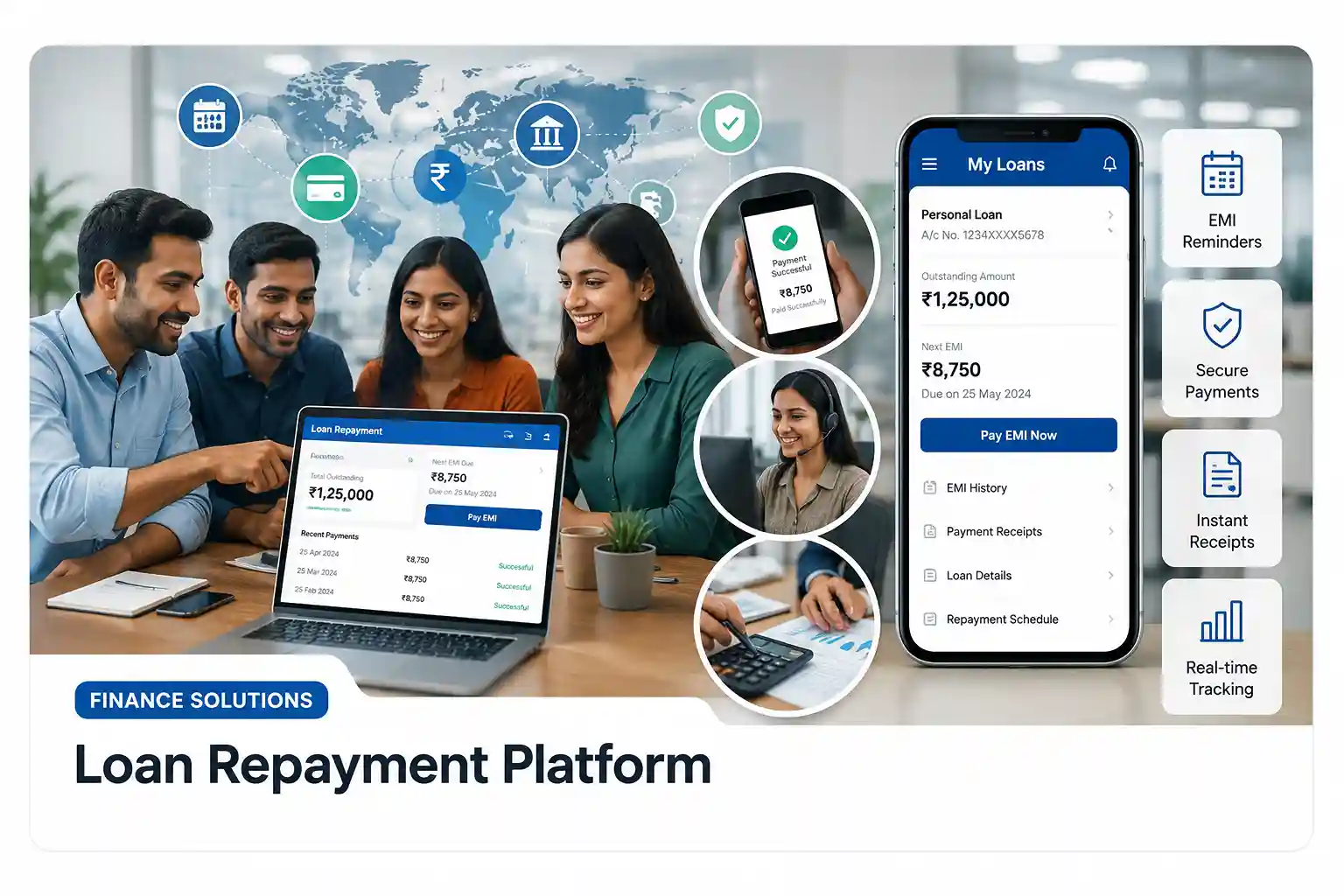
Digital financial platforms have transformed how customers manage loan payments and EMI transactions. Users today expect simple, fast, and secure payment experiences without lengthy procedures or branch visits. Whether customers have personal loans, vehicle loans, education loans, home loans, or business financing, digital systems now make repayment more convenient and accessible.
A modern Loan Repayment platform should support much more than standard EMI payments. Customers expect instant payment processing, payment reminders, account visibility, transaction history, secure payment methods, and automated notifications. Businesses operating lending ecosystems also require retailer management, payment dashboards, analytics systems, and scalable API integrations.
Modern fintech ecosystems often integrate loan services with UPI QR Payments, BBPS platforms, Money Transfer services, and CRM systems. Combining multiple financial services improves customer engagement and creates stronger ecosystems.
If you are planning to build a digital EMI and repayment ecosystem, below are the key features every successful loan repayment platform should include.
Advanced Loan Repayment Platform Features
EMI Calendar View
Track EMI due dates visually with calendar-based loan tracking.
Loan Health Score
Based on payment history, delays, and outstanding balance.
Loan Progress
EMI completion progress
75% loan already repaid successfully.
Interest Breakdown
Blue = Principal | Orange = Interest
Auto Debit System
Enable automatic EMI deduction to avoid late payments.
Loan Closure Quote
Instant full settlement amount calculation & closure option.
1. EMI Payment Integration
EMI Payment Integration refers to a feature in digital payment systems that allows users to convert eligible transactions into Equated Monthly Installments (EMIs), making high-value purchases more affordable by spreading the cost over a fixed repayment period. In a UPI-based ecosystem governed by the National Payments Corporation of India, EMI integration enables seamless conversion of payments at checkout through partner banks or financial institutions, where the total amount is split into monthly installments with applicable interest or zero-cost EMI options. This feature is commonly used for e-commerce, travel bookings, and merchant purchases. It improves customer affordability, increases sales conversion for businesses, and enhances user experience by offering flexible repayment options. EMI integration also includes instant eligibility checks, repayment schedules, and transparent billing to ensure smooth financial management for users.
2. Multiple Loan Provider Support
Multiple Loan Provider Support refers to a feature in digital financial platforms that enables integration with several lending institutions under a single system, allowing users or merchants to access loan products from different providers without switching platforms. In a UPI-based ecosystem managed by the National Payments Corporation of India, this integration helps connect banks, NBFCs (Non-Banking Financial Companies), and fintech lenders through APIs to offer various loan options such as personal loans, business loans, or credit lines. The system can compare interest rates, eligibility criteria, and approval speed across providers, giving users more flexibility and better financial choices. For platforms, it increases loan disbursal opportunities, improves user engagement, and enhances revenue streams.
3. Instant Loan Detail Fetching
Instant Loan Detail Fetching refers to a feature in digital financial systems that allows real-time retrieval of a user’s loan information from integrated lending providers through secure APIs. In a UPI-based ecosystem governed by the National Payments Corporation of India, this functionality enables platforms to instantly access details such as loan balance, EMI schedule, interest rate, repayment history, outstanding amount, and due dates from banks or NBFC systems. The process eliminates manual verification and reduces waiting time, providing users with immediate visibility into their loan status. It is commonly used in fintech apps, loan marketplaces, and payment platforms to offer quick loan management and repayment services. This feature improves transparency, enhances user convenience, and supports better financial planning by delivering accurate and up-to-date loan information in real time.
4. Automated EMI Reminder System
An Automated EMI Reminder System is a digital feature designed to notify users about upcoming Equated Monthly Installment (EMI) payments to ensure timely repayment and avoid penalties. In a UPI-based ecosystem governed by the National Payments Corporation of India, this system is typically integrated with lending institutions and payment platforms to track EMI schedules in real time and send automated alerts via SMS, email, or app notifications. These reminders include details such as due date, EMI amount, loan account information, and payment links for quick settlement. The system helps users manage their finances better by preventing missed payments, improving credit scores, and reducing default risks. For lenders, it enhances repayment efficiency and lowers collection efforts, making the entire loan repayment process more organized and reliable.
5. Multiple Payment Options
Multiple Payment Options refers to a feature in digital payment systems that allows users to choose from various methods to complete a transaction based on their convenience and availability. In a UPI-based ecosystem governed by the National Payments Corporation of India, this typically includes UPI payments, QR code scanning, bank transfers, debit/credit cards, wallets, and sometimes net banking or EMI options. This flexibility ensures that users are not restricted to a single payment method and can successfully complete transactions even if one option is unavailable. Overall, multiple payment options make the digital payment ecosystem more inclusive, efficient, and user-friendly.
6. Payment History & Digital Receipts
Payment History & Digital Receipts is a feature in digital payment systems that provides users and merchants with a complete record of all transactions along with proof of payment for each successful transfer. In a UPI-based ecosystem governed by the National Payments Corporation of India, payment history includes detailed information such as transaction ID, date and time, amount, sender and receiver details, and current status (successful, pending, or failed). Digital receipts are automatically generated after every successful transaction and serve as official confirmation of payment. This feature enhances transparency, simplifies financial reconciliation for businesses, helps users track spending, and reduces disputes by providing verifiable proof of every transaction.
7. Wallet & Cashback Features
Wallet & Cashback Features in a digital payment system refer to functionalities that allow users to store money in a digital wallet and earn rewards or cashback on eligible transactions. In a UPI-based ecosystem governed by the National Payments Corporation of India, wallet integration enables users to make quick payments, receive refunds, and maintain a prepaid balance for seamless transactions. Cashback features reward users with a percentage of their spending or fixed incentives for using specific payment methods, merchants, or promotional offers. These rewards can be credited directly to the wallet or bank account and used for future payments. For businesses, this feature helps increase user engagement, boost transaction volume, and improve customer retention by encouraging repeat usage. Overall, wallet and cashback systems enhance convenience, affordability, and user satisfaction in digital payment platforms.
8. Retailer & Agent Module
A Retailer & Agent Module is a structured feature in digital payment platforms that manages a network of business users such as retailers, agents, and distributors within a hierarchical system. In a UPI-based ecosystem governed by the National Payments Corporation of India, this module enables platforms to onboard and manage agents who assist in providing services like merchant registration, cash collection, money transfers, and customer support at the ground level. Retailers typically interact directly with end customers, while agents may operate as intermediaries supporting multiple retailers or regions. The system includes role-based access, commission tracking, transaction monitoring, and performance reporting for each participant. This structure improves service reach, supports large-scale distribution, enables automated payouts, and ensures efficient management of the entire payment network.
9. Analytics Dashboard
An Analytics Dashboard is a centralized monitoring and reporting system in a digital payment platform that provides real-time insights into financial transactions, user activity, and business performance. In a UPI-based ecosystem governed by the National Payments Corporation of India, it allows merchants, agents, and administrators to track key metrics such as total transaction volume, success and failure rates, settlement status, revenue trends, and peak usage times. The dashboard presents this data using visual elements like charts, graphs, and summaries, making it easier to understand complex financial information at a glance. It helps businesses identify trends, detect issues, optimize operations, and make data-driven decisions. Overall, the analytics dashboard improves transparency, operational efficiency, and strategic planning in digital payment systems.
10. Security & Fraud Protection
Security & Fraud Protection in a digital payment system refers to the set of technologies, policies, and monitoring mechanisms designed to prevent unauthorized access, cyberattacks, and fraudulent financial activities. In a UPI-based ecosystem governed by the National Payments Corporation of India, security is implemented through multiple layers such as two-factor authentication (UPI PIN verification), encrypted data transmission, secure banking APIs, and device binding to ensure only registered devices can initiate transactions. Advanced fraud detection systems continuously monitor transaction patterns in real time to identify suspicious behavior and block potential threats. Additional safeguards like instant alerts, transaction limits, and risk scoring further strengthen protection. Together, these measures ensure safe, reliable, and trustworthy digital payments while maintaining fast and seamless transaction processing.
Frequently Asked Questions
Launch Your Loan Repayment Platform
Build a complete EMI payment ecosystem with automated reminders, secure payment systems, dashboards, and retailer modules.
Request Demo